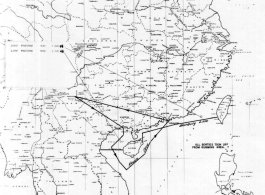
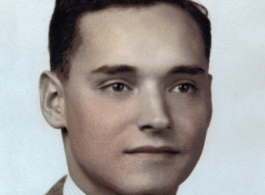
Joseph A. Siana S/Sgt Joseph A. Siana (armorer), 491st Bomb Squadron, was killed during operations on January 19, 1945, when his B-25H crashed following an attack on the Do Len bridge in French-Indo China. Click here to see him in a crew group photo, which includes Cpl. Glen A. Sneyd (engineer), T/Sgt Ashley F. Neary (radio), who were lost on...
![Rubble and skeleton buildings--all that was left of most of Liuchow [Liuzhou] after heavy aerial bombing and artillery shelling during Japanese occupation."](/sites/default/files/styles/teaser/public/article/images/1199076793ObOmoO.jpg?itok=qHfEFp4s)
![This Chinese girl, near starvation, was found in Liuchow [Liuzhou] after the Japanese evacuated the town in their retreat up the Siang Corridor. She sits among damaged buildings awaiting the reentry of Chinese and allied forces.](/sites/default/files/styles/teaser/public/article/images/11990764842NubtD.jpg?itok=fqO-bVu3)
![Liuchow [Liuzhou] was the scene of hard fighting before the Japanese finally evacuated it. These three Chinese children make the best of their lot as reoccupation of the city goes forward.](/sites/default/files/styles/teaser/public/article/images/1199076212CeZz35.jpg?itok=tM3vy_ul)
![When the Japanese left Liuchow [Liuzhou], there was not much city for the civilians to come back to. This picture, made while the Japanese were still on the outskirts, shows the damage which the Japanese did to the town.](/sites/default/files/styles/teaser/public/article/images/1199076015dcbZ6V.jpg?itok=2BJBY5mF)
![After heavy fighting in the city of Liuchow [Liuzhou], from which the Japanese were driven, civilians return to their damaged city.](/sites/default/files/styles/teaser/public/article/images/11990758435l9DJ3.jpg?itok=comWbc1D)